
Monday to Friday: 09:00am – 07:00pm
Sunday: Close
Email:stemhighpreschool@gmail.com
Phone:+91 8050125666
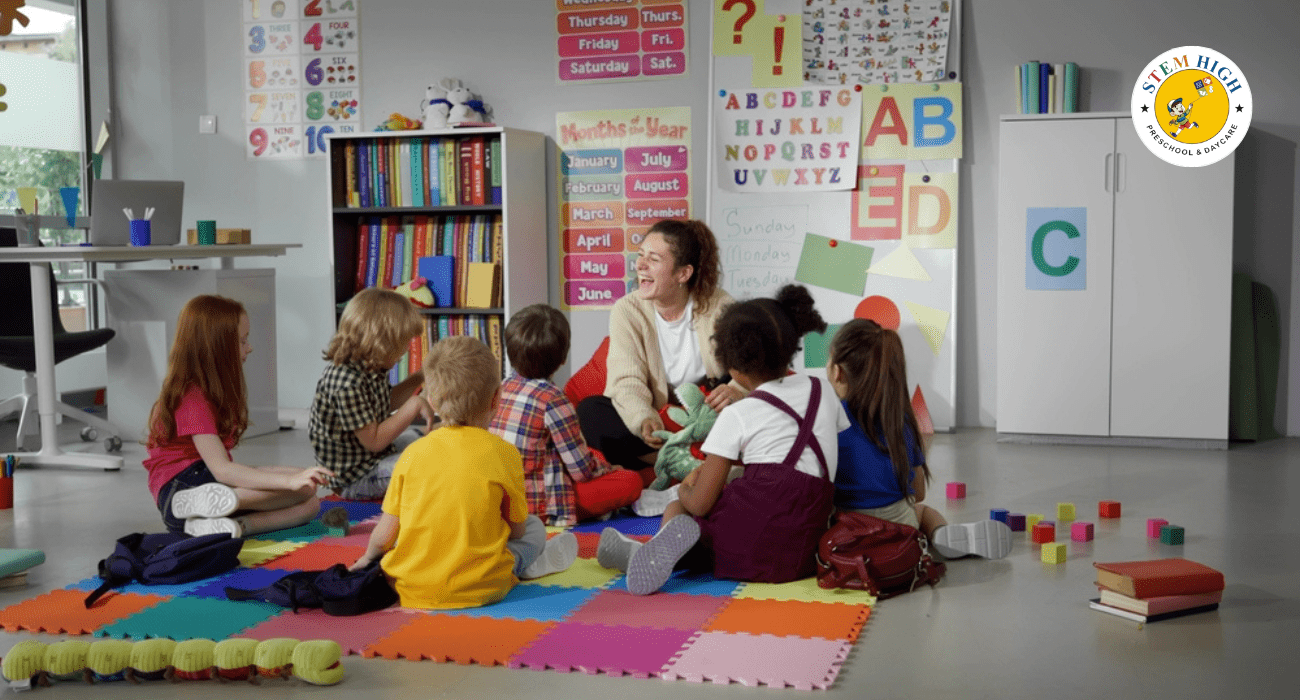
Rainy days don’t have to mean bored children and frustrated parents or teachers. When the weather keeps preschoolers indoors, it’s the perfect opportunity to explore creative indoor games that combine fun with learning. At STEMHigh Preschool, we understand that engaging indoor activities are essential for maintaining children’s development, even when outdoor play isn’t possible.
Whether you’re a parent dealing with a soggy afternoon or an educator planning indoor preschool activities, this comprehensive guide will provide you with exciting indoor games that keep young minds active and bodies moving, regardless of the weather outside.
Indoor games for preschoolers serve multiple developmental purposes beyond simple entertainment. These activities help children develop fine motor skills, cognitive abilities, social interaction capabilities, and emotional regulation. When children are confined indoors due to weather, structured play becomes even more crucial for their physical and mental well-being.
Research shows that active indoor play can be just as beneficial as outdoor activities when properly planned. The key is selecting indoor games that provide appropriate physical challenges, mental stimulation, and opportunities for creative expression.
Transform your living room or classroom into an exciting obstacle course using household items. Set up pillows to jump over, chairs to crawl under, and tape lines on the floor for balance walking. This indoor game develops gross motor skills while providing the physical activity preschoolers need on rainy days.
Create themed obstacle courses like “jungle adventure” or “space mission” to add educational elements. Children can pretend to be exploring different environments while developing coordination and following sequential instructions.
Put on upbeat music and let children dance freely until the music stops – then everyone must freeze like statues. This classic indoor game combines physical activity with listening skills and self-control. Add educational twists by having children freeze in specific shapes, letters, or animal poses.
Set up empty plastic bottles or toilet paper rolls as bowling pins and use a soft ball for knocking them down. This indoor game develops hand-eye coordination and introduces basic math concepts through counting and scoring.
Give each child a balloon and challenge them to keep it in the air using only their hands, then progress to using different body parts. This simple indoor game improves coordination and provides gentle physical activity that’s perfect for small indoor spaces.
Provide various art supplies and have children create pictures that tell a story. After completing their artwork, each child can share their story with the group. This indoor game combines creativity with language development and presentation skills.
Give children specific challenges like creating their favorite animal or building the tallest tower with playdough. These indoor games develop fine motor skills while encouraging creativity and problem-solving abilities.
Using paper plates, construction paper, and various craft supplies, children can create different emotion faces or character faces. This indoor game helps with emotional recognition and artistic expression.
At STEMHigh Preschool, we emphasize the importance of incorporating STEM learning into everyday activities, especially during indoor play time.
Simple, safe experiments using common household items can turn any rainy day into a learning adventure. Mix baking soda and vinegar for fizzy reactions, or explore density by floating different objects in water. These indoor games introduce basic scientific concepts through hands-on exploration.
Challenge children to build specific structures like bridges, towers, or houses using various building materials. Set parameters like height requirements or weight-bearing challenges to introduce engineering concepts through play.
Create various sorting activities using buttons, colored blocks, or household items. Children can sort by color, size, shape, or create patterns. These indoor games develop mathematical thinking and logical reasoning skills.
Design age-appropriate treasure hunts that require problem-solving and reading skills. Hide objects around the indoor space and provide picture clues or simple written clues for older preschoolers. This indoor game combines physical activity with cognitive challenges.
Set up blankets and pillows to create an indoor campsite. Children can “roast” pretend marshmallows, tell stories with flashlights, and sing camping songs. This indoor game encourages imaginative play while creating a special indoor environment.
Transform your space into a restaurant where children can take turns being customers, servers, and chefs. This indoor game develops social skills, math concepts through play money, and encourages creative role-playing.
Create an indoor garden using potted plants, watering cans, and gardening tools. Children can practice caring for plants, learning about growth, and developing responsibility. This indoor game connects children with nature even when stuck indoors.
Provide various age-appropriate puzzles and brain teasers for quieter indoor activities. These games develop problem-solving skills and patience while giving children a break from more active indoor games.
Build cozy reading spaces using blankets and pillows where children can enjoy books independently or in small groups. This indoor game promotes literacy while creating a special indoor environment for quiet activities.
Create lists of items for children to find around the indoor space. Include items of different colors, shapes, or textures to make the indoor game educational. This activity gets children moving while developing observation skills.
Adapt the classic charades game for preschoolers using simple actions, animals, or emotions. This indoor game develops communication skills, body awareness, and social interaction abilities.
When planning indoor games for rainy preschool days, consider these essential strategies:
Space Management: Ensure adequate space for safe movement and clear boundaries for different activity areas. Even small indoor spaces can accommodate engaging indoor games with proper planning.
Safety First: Always prioritize safety when setting up indoor games. Remove breakable items, ensure soft surfaces for physical activities, and maintain clear pathways.
Age-Appropriate Challenges: Select indoor games that match your children’s developmental levels while providing appropriate challenges to promote growth.
Rotation and Variety: Keep indoor games fresh by rotating activities and introducing new challenges regularly. This prevents boredom and maintains engagement during extended indoor periods.
Clean-Up Integration: Make cleaning up part of the indoor games by turning it into a sorting game or timed challenge. This teaches responsibility while maintaining organization.
At STEMHigh Preschool, we believe that every indoor game should contribute to children’s overall development. Our approach integrates learning opportunities into fun activities, ensuring that rainy days become productive learning experiences rather than lost opportunities.
We focus on creating indoor games that develop multiple skills simultaneously. For example, our indoor obstacle courses might incorporate counting steps, identifying colors, and following complex instructions, turning simple physical activity into comprehensive learning experiences.
Indoor games can be successfully adapted for various group sizes, from individual play to large group activities. Consider these modifications:
Individual Play: Focus on self-directed indoor games like puzzles, art projects, or building challenges that children can complete independently.
Small Groups: Perfect for cooperative indoor games like collaborative art projects or partner-based physical activities.
Large Groups: Choose indoor games that can accommodate everyone, such as dance parties, group story time, or whole-class scavenger hunts.
Every indoor game presents opportunities for learning integration. Use indoor activities to reinforce concepts like:
Smart preschool programs like STEMHigh Preschool always have extensive indoor game repertoires ready for unexpected weather changes. By maintaining a collection of engaging indoor activities, educators ensure that learning and development continue regardless of outdoor conditions.
Consider creating themed indoor game weeks that align with your curriculum goals. This approach transforms rainy day activities from emergency entertainment into planned educational experiences that complement your regular programming.
Rainy days don’t have to disrupt preschool learning and development. With thoughtful planning and creative indoor games, these weather-bound days can become some of the most memorable and productive learning experiences for young children.
The key to successful indoor games lies in balancing physical activity, creative expression, educational content, and pure fun. By incorporating these diverse indoor activities into your rainy day toolkit, you’ll be prepared to keep preschoolers engaged, active, and learning no matter what the weather brings.
Remember that the best indoor games are those that capture children’s natural curiosity and energy while providing opportunities for growth and development. Whether you’re dealing with a single rainy afternoon or a week of stormy weather, these indoor games will help transform challenging weather days into exciting learning adventures.
At STEMHigh Preschool and in homes everywhere, rainy days can become opportunities for discovery, creativity, and joyful learning through well-planned indoor games that nurture young minds and bodies.
Need help? Our team is just a message away








Comments are closed