
Monday to Friday: 09:00am – 07:00pm
Sunday: Close
Email:stemhighpreschool@gmail.com
Phone:+91 8050125666
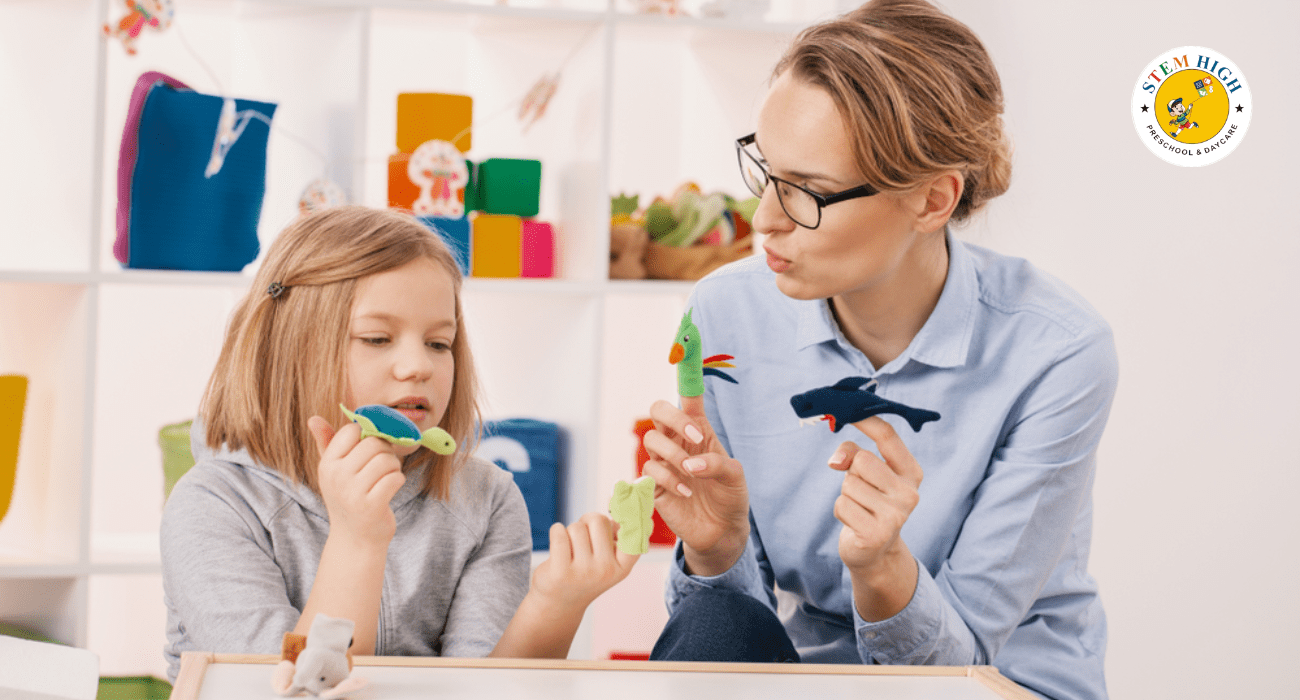
At STEM High Preschool in Ramamurthy Nagar, Bangalore, learning is always an adventure. One of the most creative and engaging ways we bring lessons to life is through puppetry — a timeless art form that turns stories into experiences and lessons into laughter.
Puppets are more than just playful characters; they are powerful educational tools that inspire curiosity, spark imagination, and make learning joyful. Whether it’s a puppet helping children understand emotions or introducing numbers in a fun way, puppetry has a special ability to connect with young minds.
In this blog, we’ll explore how puppetry supports early childhood development, promotes communication and emotional growth, and enhances the overall classroom experience — especially in preschools like STEM High, where learning through play is at the heart of everything we do.
For preschoolers, learning happens best when it feels like play. Puppetry transforms lessons into lively stories where children see, hear, and participate. At STEM High Preschool, teachers often use hand or finger puppets during storytelling sessions, circle time, or even in simple conversations.
Children instantly relate to puppets — they listen attentively, respond eagerly, and often learn important lessons without even realizing they’re “studying.”
For instance, a puppet can talk about the importance of sharing toys or saying “thank you,” and children absorb the message more easily because it comes from a fun, non-threatening character rather than direct instruction.
Puppetry plays a vital role in developing cognitive and problem-solving skills in young children. When children watch a puppet show, they are not just entertained — they’re learning to follow sequences, recognize cause and effect, and predict outcomes.
At STEM High Preschool, puppets are often used to introduce new vocabulary, phonics, and sentence patterns. When a puppet asks, “What color is my hat?” or “Can you count my apples?”, children respond eagerly, practicing speech and listening skills at the same time.
Storytelling with puppets also builds narrative understanding — children learn about beginnings, middles, and endings, strengthening comprehension and memory. These early literacy skills form a strong foundation for future reading and communication.
Puppetry encourages symbolic thinking — the ability to use imagination to represent real-life situations. When a puppet pretends to be a doctor or an astronaut, children start imagining possibilities beyond their everyday experiences, expanding creativity and cognitive flexibility.
Emotional expression is an essential part of growing up, and puppetry offers a gentle way for children to understand and express their emotions. Many preschoolers find it easier to talk to a puppet than to an adult.
At STEM High Preschool, teachers often use puppets to discuss feelings — happiness, sadness, fear, or anger. For instance, a puppet might say, “I feel sad because my friend didn’t play with me today,” prompting children to share similar experiences. This helps them learn empathy and emotional regulation.
By identifying with puppet characters, children learn to handle emotions constructively. They realize it’s okay to feel upset, but it’s also important to find kind and positive ways to respond. Puppets become friends who guide children toward emotional maturity in a warm, non-judgmental way.
Puppetry naturally promotes social skills like teamwork, listening, and cooperation. When children participate in puppet shows, they take on roles, learn dialogues, and perform together — fostering communication and collaboration.
Even in group storytelling sessions at STEM High Preschool, puppetry helps children learn how to take turns, wait for their cues, and appreciate others’ contributions.
For shy or introverted children, puppets can be a confidence booster. Speaking “through” a puppet gives them a voice, helping them open up and express themselves freely. Over time, this builds self-confidence and helps them feel more comfortable in group settings.
Puppets can gently teach values and life lessons in ways that resonate deeply with young children.
At STEM High Preschool, teachers often use puppet shows to teach kindness, honesty, respect, and sharing. For example:
Through these stories, children learn right from wrong, develop empathy, and begin to understand how their actions affect others. The lessons are memorable because they come wrapped in play and emotion.
Creativity is the heartbeat of early learning, and puppetry brings it to life. Making puppets, decorating them, and inventing stories give children endless opportunities to explore their imagination.
At STEM High Preschool, children often create their own puppets during art and craft sessions — using socks, paper bags, or popsicle sticks. They name their creations, design personalities, and even act out mini stories.
This hands-on activity not only strengthens fine motor skills but also nurtures storytelling ability and confidence. When children put on a show for their friends, they practice leadership, expressive communication, and creativity — essential 21st-century skills that will benefit them throughout life.
The beauty of puppetry is that it fits into almost every area of early learning. Here’s how teachers at STEM High Preschool in Ramamurthy Nagar integrate puppets across subjects:
Puppets can introduce letters, sounds, and rhymes. For instance, “Leo the Lion” might roar words that begin with the letter ‘L,’ helping children associate sounds with letters.
A forgetful puppet who “can’t count properly” invites children to help, reinforcing counting, number recognition, and basic math concepts.
Puppets can introduce topics like plants, seasons, and animals. A puppet named “Sunny the Squirrel” might talk about collecting nuts for winter, sparking curiosity about nature and animal behavior.
Through puppets, children can explore different cultures and festivals. For instance, a puppet could introduce Diwali, Christmas, or regional traditions, promoting respect for diversity and inclusivity.
Every child learns differently, and puppetry can adapt beautifully to diverse learning needs. For children with speech delays or social challenges, puppets offer a comforting and interactive way to engage.
At STEM High Preschool, teachers use puppets to model greetings, sharing, and polite behavior — helping children with special needs observe and imitate positive interactions. The expressive voices and clear gestures of puppets make communication more accessible, inclusive, and fun.
Puppetry doesn’t require elaborate setups or professional skills. Here are some practical tips that STEM High Preschool educators follow to make puppet time meaningful and effective:
Start with a few puppets and short, relatable stories. Hand or sock puppets are easy to handle and allow expressive storytelling.
A puppet can announce daily activities, remind children about rules, or sing the clean-up song. This makes transitions smoother and keeps children engaged.
Invite children to talk to the puppet, ask questions, or teach the puppet something new. This builds confidence and language fluency.
Let children make their own puppets using safe, simple materials. It adds ownership to their learning and encourages imagination.
After each puppet activity, ask reflective questions like “What did the puppet learn today?” or “How could the puppet behave better next time?” This encourages moral reasoning and comprehension.
Puppetry isn’t just for children — it’s a teaching tool that makes educators’ work more joyful and effective. At STEM High Preschool, teachers find that using puppets helps manage classroom behavior positively.
For instance, instead of scolding, a teacher might say through a puppet, “Oh dear, I see someone forgot to raise their hand!” — turning discipline into play. Puppets also help teachers maintain attention and variety in lessons, preventing monotony and keeping the energy lively.
Most importantly, puppets remind teachers that learning should always be fun. They help transform a classroom into a space filled with curiosity, laughter, and emotional connection.
In today’s fast-paced, digital-driven world, puppetry brings back the magic of storytelling, imagination, and human connection. It allows children to learn with joy, express freely, and explore the world around them through play.
At STEM High Preschool in Ramamurthy Nagar, Bangalore, we believe that the best learning happens when children are actively involved, emotionally engaged, and happily curious — and puppetry does all of this beautifully.
By integrating puppets into daily classroom activities, teachers can turn simple lessons into unforgettable experiences, shaping confident, creative, and compassionate learners.
As we often say at STEM High — “A puppet may be small, but the lessons it teaches are larger than life.”
Need help? Our team is just a message away







Comments are closed