Monday to Friday: 09:00am – 07:00pm
Sunday: Close
Email:stemhighpreschool@gmail.com
Phone:+91 8050125666
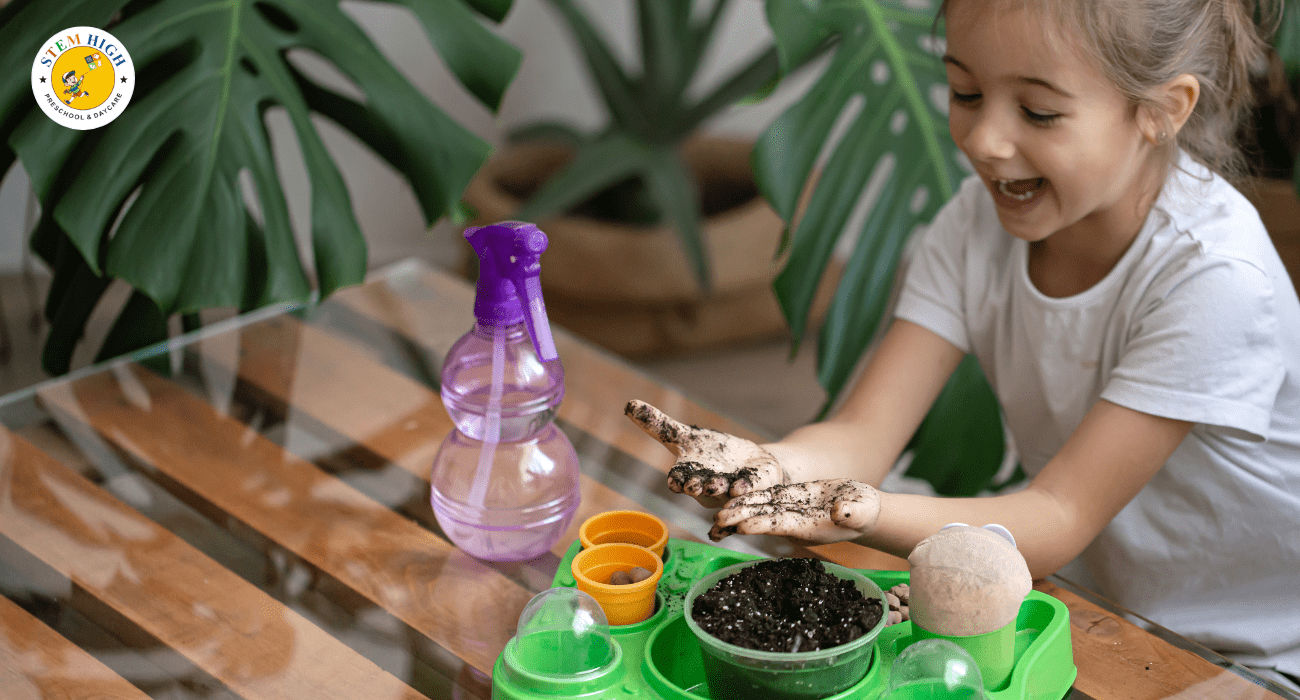
In today’s world, where screens often grab a child’s attention quickly, hands-on learning through nature remains one of the most powerful ways to spark curiosity. For young children, exploring leaves, stones, twigs, and seeds is more than just play—it’s an opportunity to build creativity, sensory awareness, problem-solving skills, and a deep connection with the natural world. At STEM High Preschool, we believe that nature-based learning lays a strong foundation for early childhood development, which is why natural crafts form an important part of our daily activities.
Crafting with natural materials not only helps children learn but also encourages them to appreciate their environment. Whether inside the classroom or outside in the garden, children can discover endless possibilities with items found right around them. This blog explores the benefits of natural crafting and shares simple, fun, and enriching activity ideas perfect for preschoolers.
Natural materials provide diverse textures—smooth stones, rough bark, soft petals, and crunchy leaves. These variations stimulate a child’s senses, helping them learn through touch, sight, and smell. At STEM High Preschool, we design sensory-rich activities that build stronger neural connections and support early learning.
Unlike structured craft kits, natural materials have no fixed shape or purpose. A stick can be a wand, a letter, or the leg of a handmade puppet. This open-ended nature encourages preschoolers to think creatively and express themselves freely.
Introducing children to eco-friendly crafting early in life builds a strong sense of responsibility toward nature. Reusing fallen leaves or stones teaches children to value and protect the environment—a value strongly promoted at STEM High Preschool.
Picking up pebbles, threading leaves, or arranging twigs helps strengthen finger muscles. These movements improve coordination and are essential for writing, drawing, and self-care tasks like buttoning clothes.
Natural crafting motivates children to go outdoors, observe their surroundings, and collect materials mindfully. This time spent in nature improves physical health, reduces stress, and boosts happiness.
Ready to try nature-based activities? Here are some easy and engaging craft ideas that preschool children enjoy at STEM High Preschool and that you can also recreate at home.
Materials: Fresh leaves, paints, paper
How to Do:
Children apply paint on the underside of leaves and press them onto paper to create beautiful patterns.
Learning Benefits: Teaches symmetry, texture observation, and color recognition.
Materials: Smooth stones, watercolor paints or markers
How to Do:
Let children paint faces, animals, shapes, or patterns on stones.
Learning Benefits: Builds imagination and improves fine motor control.
Materials: Cardboard, glue, leaves, flowers, seeds, small twigs
How to Do:
Children arrange natural items on cardboard to create scenic pictures like forests, houses, or animals.
Learning Benefits: Enhances creativity and decision-making.
Materials: Twigs, fabric pieces or leaves, glue, googly eyes
How to Do:
Use sticks as the base and decorate them as characters—animals, family members, or imaginary creatures.
Learning Benefits: Encourages storytelling and expressive language development.
Materials: Seeds of different colors and sizes, glue, paper
How to Do:
Children place seeds in patterns or simple shapes like flowers or hearts.
Learning Benefits: Improves hand-eye coordination and teaches patterns.
Materials: Masking tape, leaves, petals, small flowers
How to Do:
Wrap tape (sticky side out) around a child’s wrist and let them decorate it with natural elements during a nature walk.
Learning Benefits: Combines fine motor skills with outdoor exploration.
Materials: Crayons, paper, tree bark
How to Do:
Place paper on tree bark and rub crayons gently to reveal natural textures.
Learning Benefits: Teaches texture awareness and observational skills.
Materials: Pinecones, leaves, clay, small twigs
How to Do:
Children use pinecones as the main body and attach leaves or twigs to form ears, arms, or tails.
Learning Benefits: Encourages problem-solving and imaginative thinking.
Materials: A variety of natural items
How to Do:
Ask children to sort by size, shape, color, or texture.
Learning Benefits: Introduces early math concepts like classifying and grouping.
Materials: Straight twigs, glue, cardboard
How to Do:
Children arrange twigs to form letters or numbers and stick them onto cardboard.
Learning Benefits: Strengthens literacy and numeracy skills in a fun way.
Always ensure that children collect items from clean areas. At STEM High Preschool, teachers supervise outdoor exploration to maintain safety.
Avoid very sharp sticks, thorny plants, or small seeds that could be swallowed.
Let children explore freely—there is no “wrong” way to craft with natural materials.
Teach children not to pluck flowers unnecessarily or disturb wildlife.
This helps develop responsibility and good habits early.
At STEM High Preschool, our philosophy blends hands-on learning with environmental awareness. Natural crafts are woven into our curriculum because they:
Our classrooms and outdoor learning zones are specifically designed to give preschoolers the space and freedom to create, explore, and build with natural items. Whether we’re making clay impressions, building leaf crowns, or crafting pinecone animals, our activities provide the perfect balance of fun and learning.
Crafting with natural materials is simple, cost-effective, and incredibly beneficial for young learners. It brings children closer to nature while developing essential skills like creativity, problem-solving, communication, and sensory awareness. Whether you’re a teacher, parent, or caregiver, you can easily incorporate these ideas into daily routines.
At STEM High Preschool, we continue to embrace nature-based learning as an important part of early childhood education. With every leaf collected, stone painted, or twig arranged, children build memories and skills that will stay with them for life.
Need help? Our team is just a message away







Comments are closed