Monday to Friday: 09:00am – 07:00pm
Sunday: Close
Email:stemhighpreschool@gmail.com
Phone:+91 8050125666
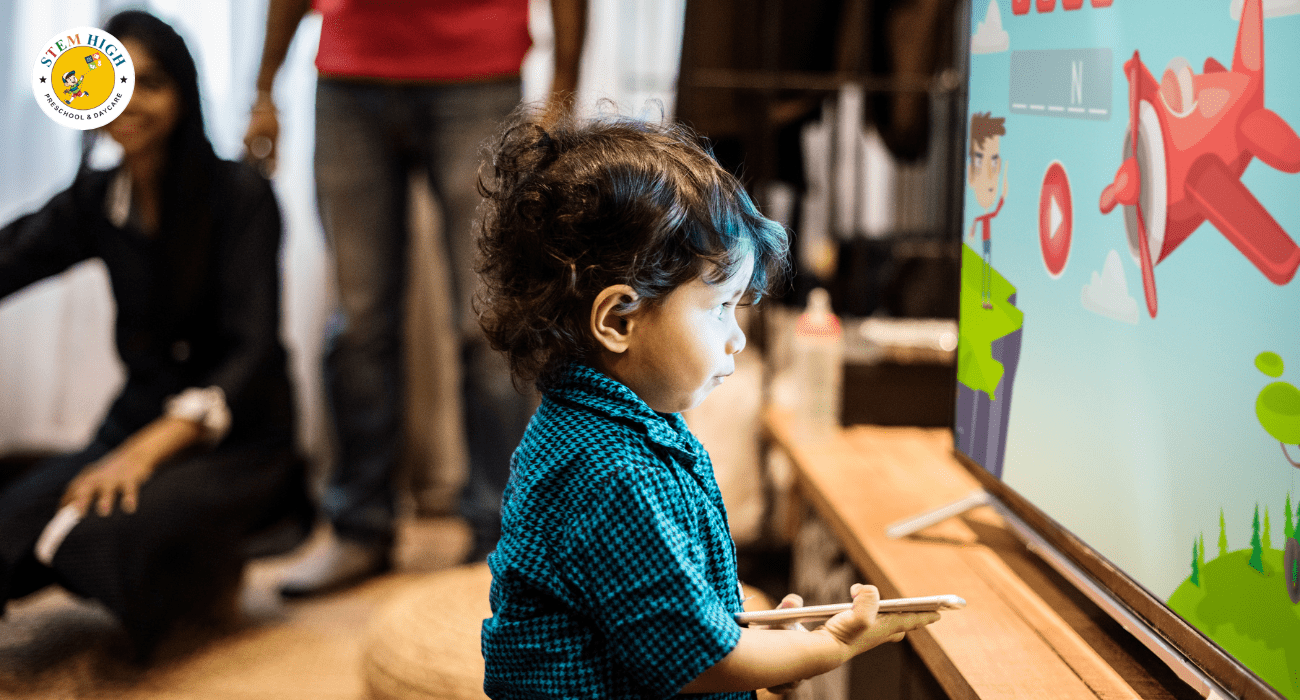
Inclusive classrooms are designed to support children of all abilities, learning styles, and developmental needs. In early childhood education, inclusion is especially important because young learners are still building foundational skills in communication, social interaction, and cognition. One of the most powerful tools that help create an inclusive learning environment is visual aids.
From picture cards and charts to videos and interactive displays, visual aids play a vital role in helping children understand, engage, and participate in classroom activities. At STEM High Preschool, visual learning is thoughtfully integrated into daily teaching practices to ensure that every child feels supported, confident, and included.
Visual aids are instructional tools that use images, symbols, colors, objects, and visual representations to convey information. In preschool classrooms, visual aids may include:
These tools help bridge communication gaps and make learning more accessible, especially for children who struggle with verbal instructions alone.
Inclusive classrooms bring together children with diverse abilities, including those with speech delays, learning differences, attention challenges, or sensory needs. Inclusion fosters empathy, cooperation, and respect among children while ensuring that every learner has equal access to education.
In preschool years, children learn best through play, observation, and repetition. Visual aids naturally align with these learning methods, making them an essential component of inclusive teaching.
At STEM High Preschool, inclusion is not just a concept—it is a practice embedded into lesson planning, classroom design, and teaching strategies.
Young children often find it difficult to process long verbal explanations. Visual aids simplify complex ideas by presenting them in a concrete and recognizable form. For example, a picture chart showing weather types helps children quickly associate words with images.
In inclusive classrooms, this is especially beneficial for:
By pairing spoken instructions with visuals, teachers ensure that no child is left behind.
Visual aids are extremely effective for children with special educational needs such as autism spectrum disorder (ASD), ADHD, or learning disabilities. These children often respond better to visual cues than verbal instructions.
Examples include:
At STEM High Preschool, visual schedules are used daily to help children understand routines, increasing their sense of security and independence.
Preschoolers have short attention spans, and this can be more challenging in inclusive settings. Bright, engaging visuals capture children’s interest and help them stay focused on tasks.
Interactive visuals—such as matching cards, storyboards, or digital learning tools—encourage active participation rather than passive listening. This helps children who struggle with concentration remain engaged for longer periods.
Visual aids act as communication bridges, especially for children who are non-verbal or have limited speech. Picture cards, sign visuals, and illustrated story sequences help children express their needs and ideas.
For example:
At STEM High Preschool, visual storytelling tools are used to promote vocabulary development and confident communication among all learners.
Visual aids empower children to complete tasks independently. When children can see what is expected of them, they rely less on constant adult guidance.
Visual reminders such as:
help children follow routines independently. This boosts confidence and self-esteem, especially for children who may otherwise feel overwhelmed.
Inclusive classrooms thrive on multisensory learning approaches. Visual aids often work alongside auditory and tactile experiences, creating a richer learning environment.
For example:
At STEM High Preschool, STEM activities are designed to include visual, hands-on, and interactive elements, ensuring that every child can learn in a way that suits them best.
STEM education focuses on science, technology, engineering, and mathematics—subjects that benefit greatly from visual representation. Abstract concepts become easier to understand when supported by diagrams, models, and images.
In inclusive preschool classrooms, visual STEM tools include:
These visuals help children grasp foundational STEM concepts while encouraging curiosity and problem-solving skills.
To use visual aids effectively, educators should:
At STEM High Preschool, teachers carefully select and design visual materials to suit diverse learning needs, ensuring inclusivity without overstimulation.
Teachers play a key role in introducing and reinforcing visual aids, but parents can also extend visual learning at home. Using visual routines, charts, and picture books at home creates consistency between school and home environments.
STEM High Preschool actively collaborates with parents by sharing strategies and resources that support visual learning beyond the classroom.
Visual aids are more than just decorative classroom tools—they are essential instruments for creating inclusive, engaging, and effective learning environments. By supporting comprehension, communication, focus, and independence, visual aids ensure that every child, regardless of ability, has the opportunity to succeed.
In inclusive preschool settings like STEM High Preschool, visual learning plays a crucial role in nurturing confident, curious, and capable learners. When children can see, understand, and interact with their learning, inclusion becomes natural—and education becomes meaningful for all.
Need help? Our team is just a message away





Comments are closed