Monday to Friday: 09:00am – 07:00pm
Sunday: Close
Email:stemhighpreschool@gmail.com
Phone:+91 8050125666
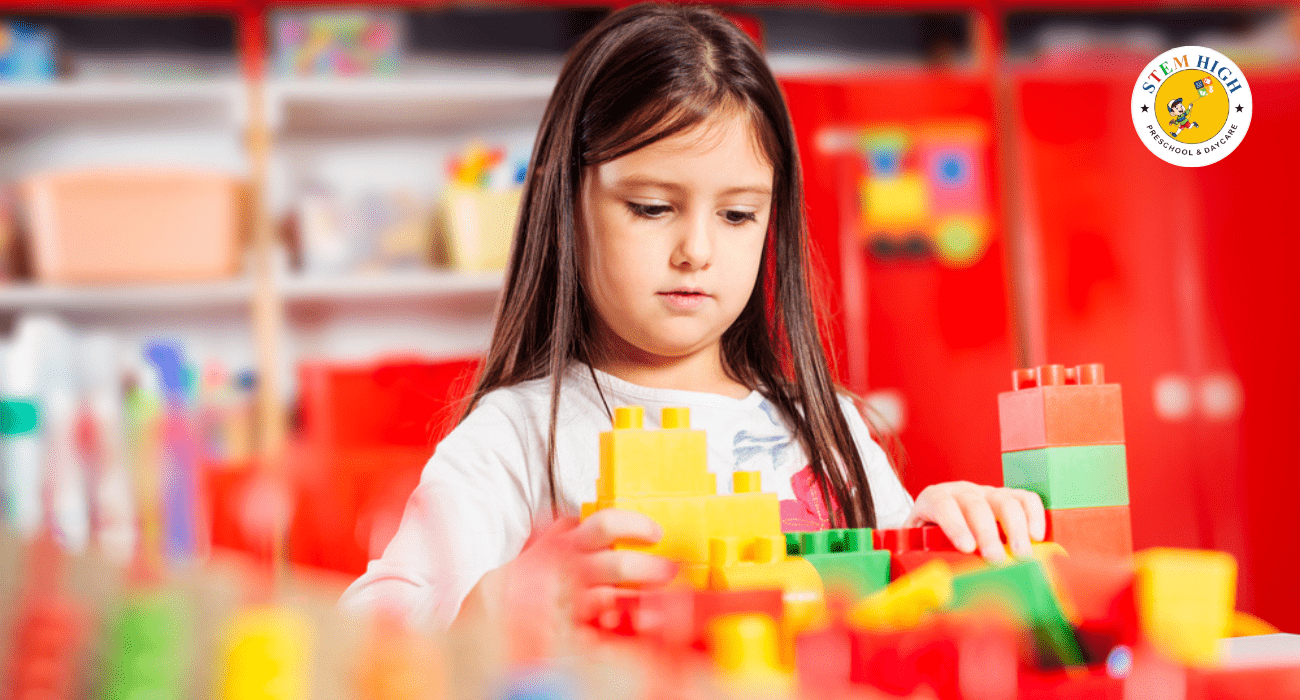
In the early years of life, children learn best not through worksheets or rote memorization, but through play. Play-based learning is widely recognized by early childhood experts as one of the most powerful ways to develop thinking skills, creativity, and problem-solving abilities in preschoolers.
In this blog, we’ll explore what play-based learning is, how it supports cognitive development, and why it is essential for building strong thinking skills in young children.
Play-based learning is an educational approach where children learn through hands-on, meaningful play experiences rather than formal instruction alone.
Instead of being told what to think, children:
This type of learning is child-led, guided by teachers who create a supportive environment where learning happens naturally through play.
Thinking skills—also known as cognitive skills—are the foundation for lifelong learning. These include:
Preschool is a critical period when the brain develops rapidly. Experiences during these years directly influence how children learn, think, and adapt in school and life.
Play-based learning strengthens these skills in a way that feels fun, safe, and engaging
During play, children constantly face small challenges:
By experimenting and finding solutions on their own, preschoolers develop logical thinking and reasoning skills.
Unlike adult-led instruction, play allows children to:
This process builds resilience and independent thinking.
Imaginative play—such as pretending to run a shop, cook food, or become a doctor—helps children think beyond the obvious.
Through pretend play, children:
This type of play strengthens creative thinking, which is essential for innovation, communication, and emotional expression.
Play-based activities naturally require children to:
For example:
Because children enjoy play, they stay engaged longer—leading to better concentration and stronger memory skills.
Play-based learning introduces early math concepts without pressure.
Examples include:
These experiences help children develop numerical thinking and logical reasoning naturally, preparing them for formal math learning later.
Thinking and language develop together.
During play, children:
Storytelling, role-play, and group games encourage children to express thoughts clearly, improving both thinking clarity and communication skills.
Play gives children choices:
Making choices helps preschoolers:
This builds confidence and independent thinking, which are essential for school readiness.
Allows children to explore freely, supporting creativity and self-direction.
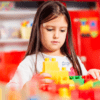
Building blocks, puzzles, and LEGO strengthen spatial awareness and problem-solving.
Pretend scenarios boost imagination, planning, and emotional understanding.
Sand, water, clay, and textures help children experiment, observe, and think scientifically.
Group activities teach collaboration, negotiation, and social problem-solving.
In a play-based environment, teachers:
Rather than giving answers, teachers guide children to think, reflect, and discover on their own.
Children who learn through play:
These skills go far beyond academics—they prepare children for lifelong success.
Play-based learning is not “just play.” It is a powerful educational approach that builds strong thinking skills during the most important years of brain development.
By allowing preschoolers to explore, imagine, and solve problems through play, we nurture:
Choosing a preschool that values play-based learning is one of the best decisions parents can make for their child’s future.
Need help? Our team is just a message away





Comments are closed