Monday to Friday: 09:00am – 07:00pm
Sunday: Close
Email:stemhighpreschool@gmail.com
Phone:+91 8050125666
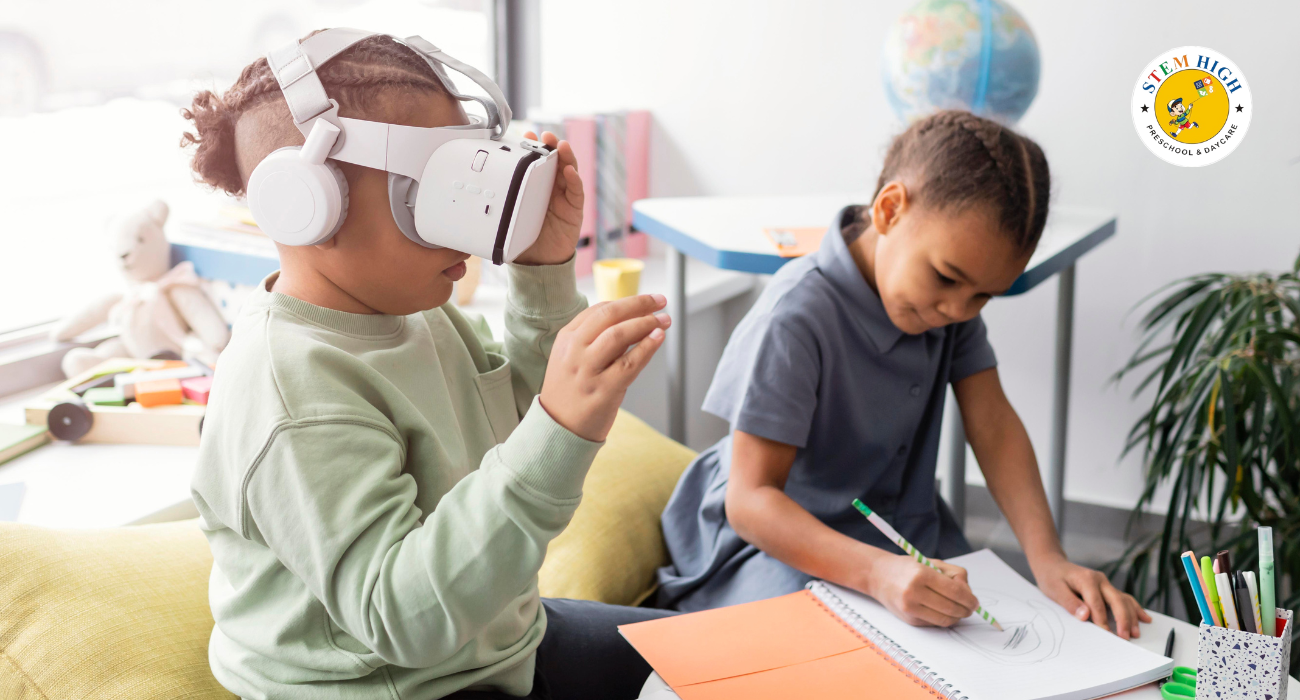
In today’s rapidly evolving digital world, technology is no longer limited to older students or workplaces. When used thoughtfully, adaptive technology can play a powerful role in early childhood education—helping preschoolers learn at their own pace, build confidence, and develop essential skills. For young children, especially those aged 2–6 years, adaptive technology is not about screen time alone; it’s about personalized learning experiences that respond to a child’s unique needs.
This blog explores what adaptive technology is, how it works in preschool settings, and how it can help children thrive academically, socially, and emotionally.
Adaptive technology refers to digital tools, apps, and learning systems that adjust content, pace, and difficulty based on a child’s responses and abilities. Unlike one-size-fits-all teaching methods, adaptive tools personalize learning in real time.
For preschoolers, this may include:
The goal is not to replace teachers, but to support educators in meeting each child where they are.
Early childhood is a critical phase of brain development. Children learn best through play, repetition, exploration, and positive reinforcement. Adaptive technology aligns perfectly with these principles.
Every child develops at a different pace. Some may grasp numbers quickly, while others need more time with language or motor skills. Adaptive tools:
This personalization helps children feel successful, which builds motivation and confidence.
Preschool classrooms include children with varied learning preferences—visual, auditory, kinesthetic, and sensory learners.
Adaptive technology supports these styles by offering:
By engaging multiple senses, adaptive tools make learning more inclusive and effective.
Language development is one of the most important aspects of preschool education. Adaptive technology can significantly support this area through:
For children who are shy, multilingual, or experiencing speech delays, adaptive tools provide a safe, pressure-free environment to practice communication.
Adaptive technology is especially valuable for preschoolers with:
Features such as adjustable pacing, visual schedules, audio cues, and simplified interfaces allow children to engage comfortably. These tools promote inclusion, ensuring that every child has equal access to learning opportunities.
When children receive learning experiences tailored to their abilities, they are more likely to:
Adaptive technology provides immediate feedback—gentle corrections, encouragement, and rewards—which helps preschoolers understand mistakes as part of learning rather than failure.
Many adaptive learning tools focus on foundational cognitive skills such as:
Through puzzles, matching games, and interactive challenges, children develop early problem-solving abilities in a playful, engaging way.
Adaptive technology has the potential to transform early childhood education by making learning personalized, inclusive, and engaging. For preschoolers, it supports cognitive growth, language development, confidence, and independence—while respecting each child’s unique learning journey.
When thoughtfully integrated into a nurturing preschool environment, adaptive technology helps children not just learn—but truly thrive.
Need help? Our team is just a message away








Comments are closed